
Meet Henrii: Motii's newest team member (and yes, they're AI)
Meet Henrii, Motii's AI customer service agent. Get expert answers on CRM, automation, and tech tools, or connect with our human team when you need a proper conversation.
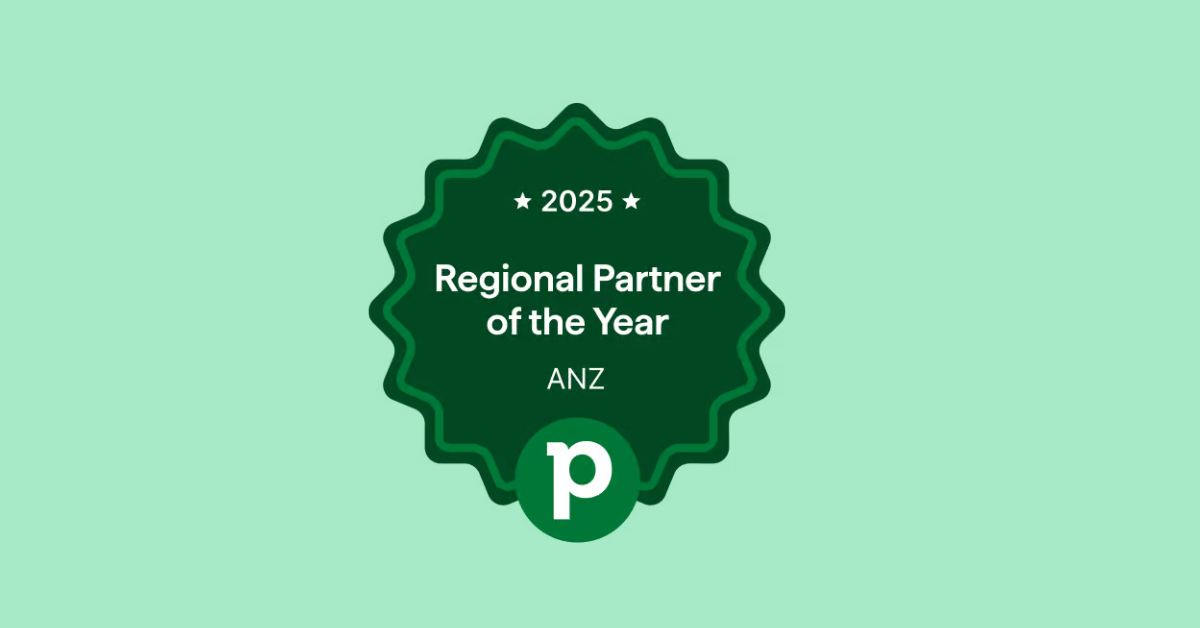
Motii has been recognised as Pipedrive’s 2025 Regional Partner of the Year for ANZ; our fourth year in a row being an award-wining Pipedrive Partner.
Awards are nice. But the real question worth asking is: what does that actually mean for the businesses we work with?
Because in our world, recognition like this isn’t about a trophy or a badge. It’s a signal. It reflects the experience built from working with hundreds of companies, designing sales systems that actually support how businesses grow.
CRM is one of the most important operational systems a company will implement. It touches revenue, sales performance, reporting, forecasting, and customer relationships. When done well, it becomes the backbone of how a company runs its commercial engine. When done poorly, it becomes an expensive database that nobody trusts.
Awards like this matter because they recognise the partners who consistently help businesses get the former rather than the latter.
For our clients, that’s where the real value sits.
Each year Pipedrive recognises partners who deliver exceptional outcomes for their customers across the region.
It’s not just about how many projects a partner completes. It’s about the quality of those implementations, the success of the customers using the platform, and the expertise brought into the ecosystem.
Partners are often the difference between a CRM system that works and one that fails to gain adoption. Because CRM software alone doesn’t solve sales problems.
It simply gives structure to the solution. The real work sits in sales process design, data structure, automation, reporting, and adoption across the team.
That’s where the partner relationship becomes critical.
.png)
Most businesses adopt a CRM because they need somewhere to manage deals and contacts.
But that’s only the starting point. A well-designed CRM becomes the operating system for revenue. It provides visibility across the pipeline, clarity around sales performance, and structure around how opportunities move from first conversation to closed deal.
When implemented properly, a CRM enables:
Without it, growth becomes far harder to manage.
Leaders rely on intuition instead of data. Pipelines become opaque. Sales performance becomes difficult to diagnose. And as businesses scale, the cracks get wider. That’s why CRM projects matter so much. They sit directly at the intersection of strategy, process, and technology.
🚀 You might also like: The Hidden Cost of DIY CRM Setup (And Why Support Matters More Than You Think)
At Motii, we’ve always believed that CRM projects should start with the sales system, not the software.
Technology is the easy part.
The harder and more valuable work is understanding how a business sells, how customers buy, and how that journey should be structured inside the CRM.
That means asking questions like:
Only once those answers are clear does the CRM configuration start to make sense.
This approach leads to systems that sales teams actually use; not because they have to, but because the CRM genuinely makes their work easier.
And when that happens, the quality of the data improves. Reporting becomes more reliable. Forecasting becomes more accurate.
The CRM becomes a tool the business trusts.
For the companies we work with, recognition like this ultimately reflects the depth of experience behind their implementation.
It means working with a team that has seen the patterns that emerge across growing organisations - the common mistakes, the shortcuts that create problems later, and the design decisions that unlock scale.
Practically, that translates into:
And perhaps most importantly, it means businesses gain a CRM that evolves with them as they grow.
One of the biggest risks with any CRM project isn’t the technology; it’s adoption.
Too often, businesses implement a CRM only to find that a few months later the system is underused and the data becomes unreliable. When that happens, the CRM stops being the source of truth for the business.
In our experience, adoption comes down to a few simple principles:
When a CRM is designed thoughtfully around real sales processes, teams don’t need to be forced to use it.
They use it because it genuinely helps them do their job better.
🚀 You might also like: Choosing the Right Pipedrive Partner: A Comprehensive Checklist
CRM software has come a long way in the last decade. But the core challenge hasn’t changed.
The difference between a CRM that drives growth and one that gathers dust rarely comes down to the platform itself. It comes down to how thoughtfully it is designed and implemented.
That’s why strong partnerships exist within the ecosystem.
Because businesses don’t just need software. They need experience, perspective, and guidance on how to translate their sales strategy into a system that actually works.
Being recognised by Pipedrive four years in a row is something we’re incredibly proud of.
But more importantly, it reflects the work we get to do alongside the businesses who trust us with one of the most important systems in their organisation.
And that trust is what matters most.

Latest updates
Meet Henrii, Motii's AI customer service agent. Get expert answers on CRM, automation, and tech tools, or connect with our human team when you need a proper conversation.
Marketing automation platforms are growing fast in search interest, but what do they actually do? Here's a plain-English breakdown, and how to know if your business is ready for one.